We Were Optimizing for AI Before AI Search Existed
BRAINJAR MEDIA·
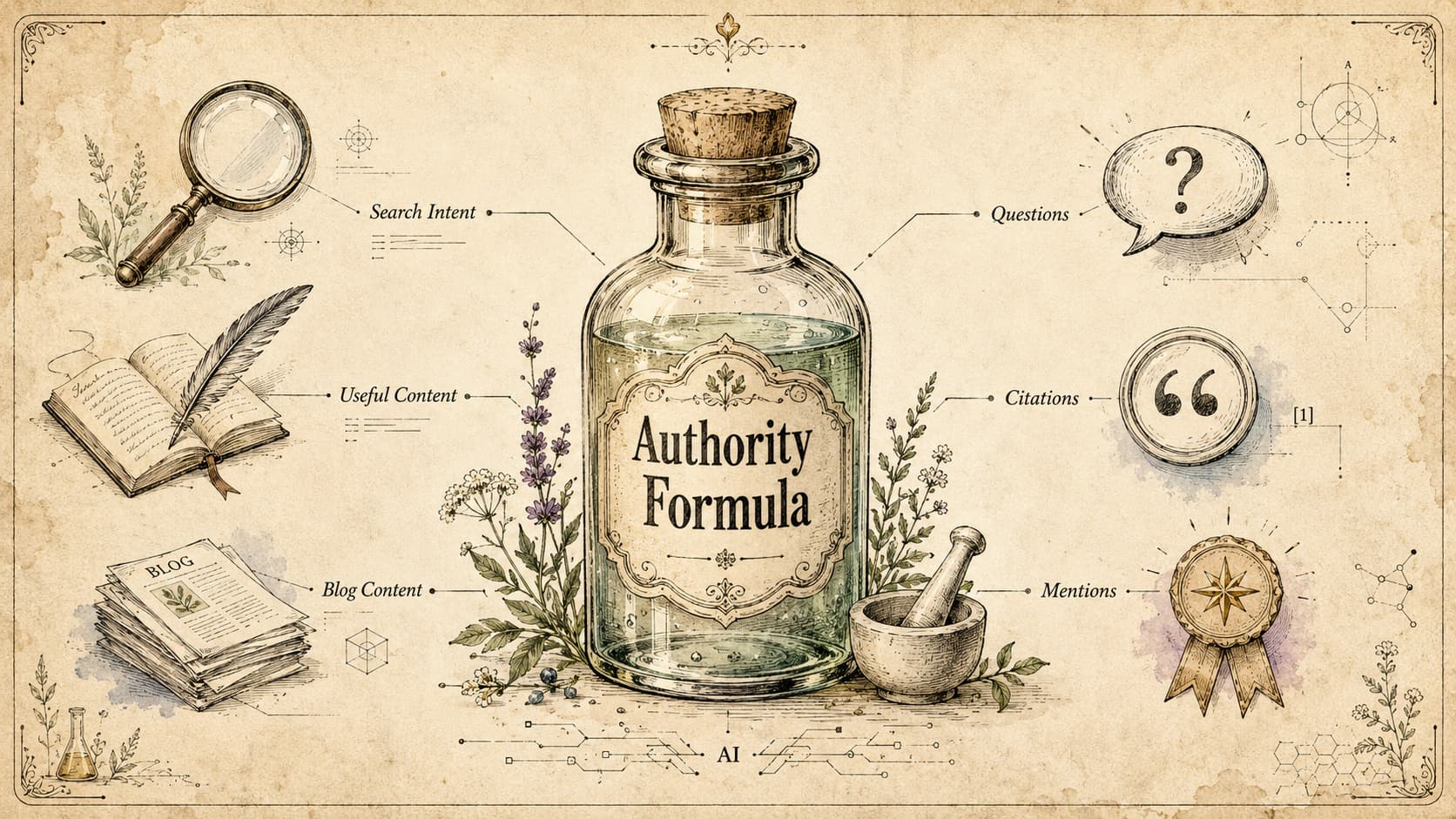
Every few years, marketing discovers a new technology, invents several acronyms and announces that everything we did yesterday is obsolete.
Now clients are asking, “Are you optimizing our website for AI?”
Yes. We have been for years.
Not because we predicted ChatGPT. We built content around the questions customers ask and the expertise our clients use to answer them. That helped businesses get found on Google. Today, it can also help them appear in AI-generated answers.
What Does “Optimized for AI” Mean?
When someone asks ChatGPT, Gemini, Perplexity or Google’s AI features a question, the system may answer directly instead of only displaying a list of links.
Being optimized for AI means your business has information these systems can find, understand and use.
That information might appear as a source, help shape an answer or cause the system to associate your business with a particular product, service or area of expertise.
This gives us two emerging measurements: AI mentions and AI citations.
What Is an AI Mention?
An AI mention occurs when an AI-generated answer names your company, product, service or expert.
For example, an answer might say that a particular company specializes in restoring historic Portland homes.
The company may not receive a link, but it has become part of the answer. The AI system is connecting that business with a subject and an area of expertise.
In traditional marketing language, that is positioning.
What Is an AI Citation?
An AI citation occurs when an answer identifies one of your webpages as a source.
ChatGPT Search, for example, may include inline citations within an answer. It can also provide a Sources panel containing cited sources and other relevant links. OpenAI explains how citations and sources appear in ChatGPT Search here.
A citation is the footnote. A mention is being included in the story.
How Do We Measure AI Visibility?
Traditional SEO gives us familiar measurements such as rankings, impressions, clicks and website traffic.
AI visibility adds several new questions:
How frequently is the business mentioned?
Which pages are being cited?
Are competitors appearing instead?
Is the business being described correctly?
Are people taking action after encountering the answer?
One flattering screenshot is encouraging, but it is not an analytics strategy.
The better approach is to test a consistent group of real customer questions and look for patterns over time.
How Is AI Visibility Different From SEO?
SEO traditionally asks:
Where does our page rank?
AI visibility asks:
Did the answer use our information, cite our page or recognize our company as an authority?
Google says its existing SEO best practices remain relevant for AI Overviews and AI Mode. There are no additional technical requirements or secret forms of markup required to appear in these features. Google still recommends useful, reliable, people-first content supported by sound technical SEO. You can read Google’s guidance for AI features and websites here.
AI optimization is not SEO’s replacement.
It is another potential outcome of doing SEO and content marketing well.
Search traditionally helped people find the page containing the answer. AI may now provide an answer first and then identify supporting sources.
That changes where visibility happens. It does not change the need to be useful.
The Click Is No Longer the Whole Story
Pew Research Center analyzed nearly 69,000 Google searches performed in March 2025. About 18% produced an AI-generated summary.
When no AI summary appeared, users clicked a traditional search result during 15% of visits. When an AI summary appeared, that dropped to 8%. Users clicked a source inside the AI summary in only 1% of visits. Read the Pew Research Center study here.
That does not mean websites no longer matter.
It means the answer itself has become part of the customer journey.
Someone may encounter your expertise, see your business mentioned, remember the name and contact you later.
You may not always receive the immediate click. You may still earn the customer’s attention.
Is Your Business Appearing in AI Answers?
Are your pages establishing your business as an authority, or are your competitors becoming the default sources?
Contact Brainjar Media for a free consultation, and we’ll review what your content communicates, where your authority is already visible and which customer questions remain unanswered.
Why Our Five-Year-Old Blogs Were Already Prepared
Our content strategy has always started with a simple rule:
If you want to be visible for a subject, build a useful page about it.
That does not mean repeating a keyword until the page sounds like it has suffered a head injury.
It means answering the question clearly, explaining what matters, anticipating the next question and showing why the client is qualified to solve the problem.
Over time, those pages turn a website from a digital brochure into a library of expertise.
Five years ago, we created that content to help clients appear when people searched Google.
Today, those same articles can help AI systems understand what those businesses know, whom they serve and which problems they solve.
We were not optimizing for a technology that had not arrived.
We were optimizing for human curiosity.
Authority Cannot Be Added With a Plugin
A website should be crawlable, organized, mobile-friendly and easy to understand.
But technology cannot manufacture authority.
Authority comes from real knowledge: original explanations, practical experience and answers that go beyond what every competitor has already copied.
A generic AI-written article may be grammatically perfect. It may even begin with “In today’s rapidly evolving digital landscape,” which is how we know the computer has become emotionally overwhelmed.
But if it says nothing distinctive, there is little reason for a person—or another AI—to treat it as the best source.
Good Marketing Is Technology-Agnostic
Before social media, useful content helped clients get found. When social media arrived, that content became shareable.
Before mobile, useful content explained services. When phones became the primary screen, that content became portable.
Now AI is changing how information is assembled and delivered.
Useful content is becoming source material.
The technology changes. Customers still need to understand a problem, compare solutions and decide whom to trust.
We did not predict AI search five years ago.
We did something better: we built marketing around people instead of platforms.
Good marketing is not tied to the newest technology.
It is prepared to travel through it.
Does AI Change Our Content Strategy?
Yes, but not as much as some marketers would like you to think.
We should monitor mentions, citations, accuracy and competitive visibility. We should update outdated pages, improve weak explanations and identify subjects where competitors are being treated as the default authorities.
But we do not need to discard years of useful content or rewrite every page in a special dialect for robots.
The important questions remain familiar:
Is the content accurate? Is it useful? Does it demonstrate real expertise? Does it answer the customer’s question? Does it make clear why this business is qualified to help?
Those questions worked before AI.
They will continue working after the next acronym arrives.
Ready to Stand Out in Search and AI?
Your business may already have valuable expertise spread across service pages, blog posts, videos and customer conversations.
Brainjar Media can turn that knowledge into clear content people can find, understand and trust—whether they begin with Google, an AI assistant or whatever arrives next.
Contact Brainjar Media for a free consultation, and we’ll diagnose what your digital presence already does well, where your authority needs strengthening and which customer questions should become your next content opportunities.
No obligation. No jargon to decode. And no new acronym unless it earns its keep.
SEO Title: AI Search Optimization: Why Good Content Was Already Ready
SEO Description: Learn what AI mentions and citations mean, how they differ from SEO, and why strong content created years ago is already positioned for AI search.
Your Google Business Profile Isn’t Sending People to Your Website Anymore. That’s the Point.
READ ON →Your New SEO Problem Isn’t Ranking. It’s Whether AI Understands Your Business.
Your New SEO Problem Isn’t Ranking. It’s Whether AI Understands Your Business. For years, businesses worried about one question: Can Google find me? Then the question became: Can Google rank me? Now we may be entering a more uncomfortable phase:
READ ON →Your Best Competitor May Be 2,000 Miles Away
In this article, we’ll explain why competitor research should include both local and national businesses,
READ ON →